
Losing a tooth affects more than your smile. It impacts your ability to chew comfortably, speak clearly, and maintain proper bite alignment. Without replacement, adjacent teeth can shift, and the jawbone begins to deteriorate where the tooth used to be.
At Centergate Family Dentistry, we understand that choosing between dental implants and bridges is a substantial decision. With over 30 years of experience serving the Sarasota community, Dr. Ibarria and our team provide comprehensive tooth replacement options designed to restore both function and appearance. We take time to educate patients about their choices and recommend conservative, patient-centered solutions that prioritize long-term oral health.
Understanding Dental Implants
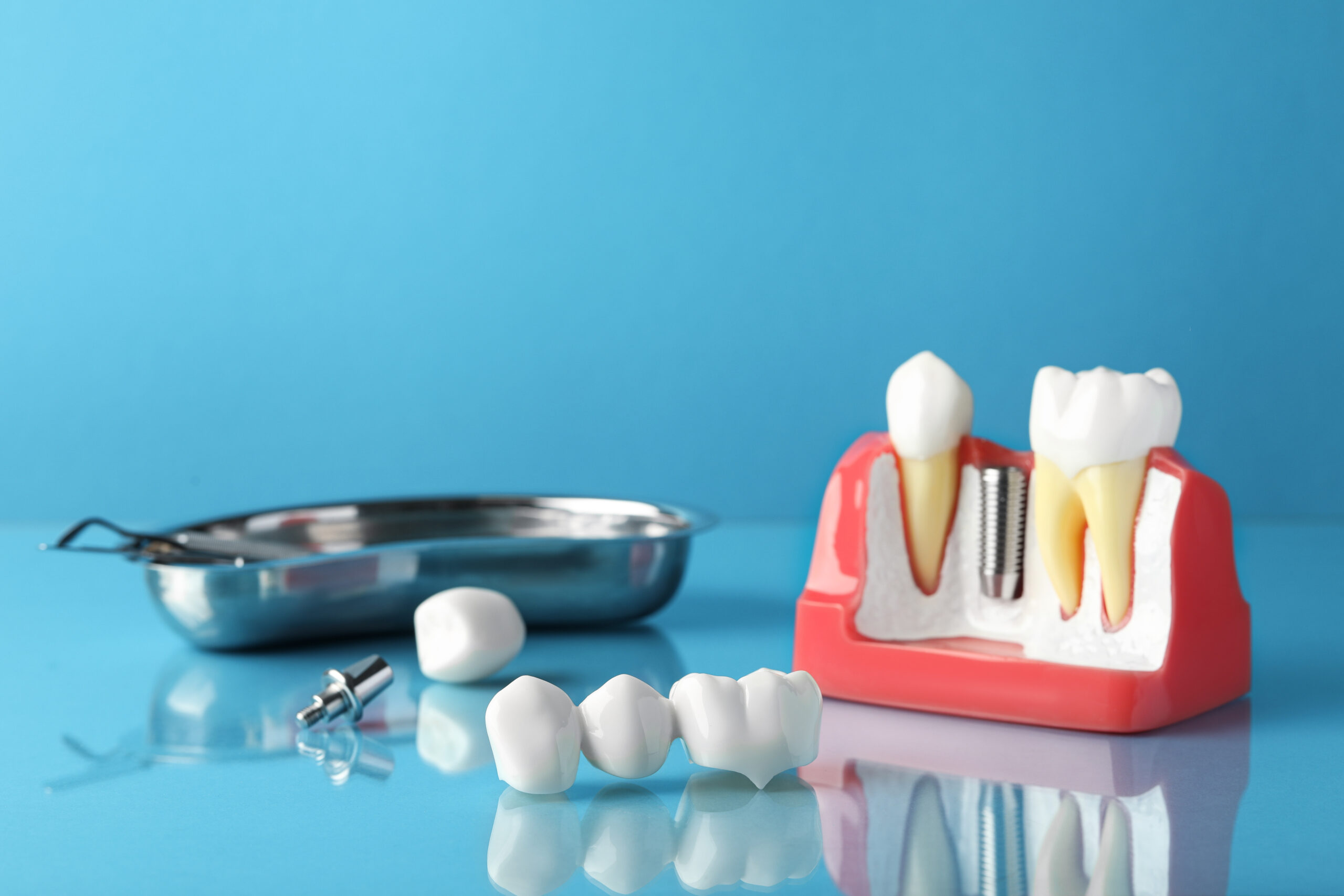
Dental implants are titanium posts surgically planted into the jawbone to function as artificial tooth roots. Once the implant fuse with the bone through a process called osseointegration, a custom crown is attached to the post. This creates a stable, permanent tooth replacement that functions like a natural tooth.
The dental implant procedure typically requires several months from start to finish. After the initial implant placement, the jawbone needs time to heal and join with the titanium post. Once integration is complete, an abutment is attached, followed by the final crown. While this timeline requires patience, the result is a durable restoration that can last decades with proper care.
Benefits of Dental Implants
Dental implants preserve jawbone density by stimulating the bone tissue just as natural tooth roots do. This stops the bone loss that typically occurs after tooth extraction. Research published in the National Library of Medicine demonstrates that dental implants maintain high success rates, with studies showing 97% success for short implants and 100% for standard-length implants over extended periods.
Implants also protect adjacent teeth because they do not require altering neighboring teeth for support. Each implant stands independently, maintaining the integrity of the surrounding dentition. They offer superior chewing function compared to other tooth replacement options and require only standard brushing and flossing for maintenance.
What Are Dental Bridges?
Dental bridges are fixed prosthetics that literally bridge the gap left by one or more missing teeth. Traditional bridges consist of artificial teeth held in place by dental crowns cemented onto the teeth adjacent to the gap. The crowns-and-bridges approach has been used successfully for decades to restore smiles.
The bridge procedure typically requires two appointments. During the initial visit, Dr. Ibarria prepares the adjacent teeth by removing enamel to accommodate the crowns. Impressions are taken and sent to a lab where the custom bridge is fabricated. A temporary bridge protects the prepared teeth until the permanent restoration is ready. At the second appointment, the permanent bridge is cemented into place.
Advantages of Dental Bridges
Bridges offer a faster timeline compared to implants, with the entire process completed in a matter of weeks rather than months. The procedure is less invasive since it does not require surgery. Cost is another consideration, as bridges typically have lower upfront costs than implants and are more likely to be covered by insurance.
For individuals who are not candidates for implant surgery due to medical conditions or insufficient bone density, bridges provide an effective alternative. They restore both function and aesthetics without the need for surgical intervention.
Making the Right Choice for Your Situation
Several factors influence which option is most appropriate for your circumstances. If you are missing multiple consecutive teeth, a bridge may be more practical than placing individual implants for each missing tooth. Implants require adequate bone density and healthy gums, so patients with bone loss may need additional procedures before implant placement.
Time considerations also play a role. If you need a relatively quick restoration, bridges can be completed much faster than the months-long implant process. Budget is another crucial factor; while implants cost more initially, they typically last longer and require fewer replacements than bridges.
Your overall oral health status matters as well. Certain medical conditions that affect healing, such as uncontrolled diabetes, may make implant surgery less advisable. The health of the teeth adjacent to the gap is relevant to bridge placement, as they must be strong enough to support the restoration. For patients requiring more comprehensive care, full mouth restorations may incorporate both implants and bridges as part of an overall treatment plan.
Restore Your Smile With Confidence at Centergate Family Dentistry
Choosing between dental implants and bridges relies on your unique oral health needs, timeline, budget, and personal preferences. Both options effectively restore missing teeth, but each offers distinct advantages depending on your situation. At Centergate Family Dentistry, we provide personalized treatment recommendations based on comprehensive evaluations.
Dr. Ibarria brings over 1,000 hours of continuing education and extensive training from LECOM School of Dental Medicine to every patient consultation. We invest in state-of-the-art technology, including intraoral scanners and CBCT 3D imaging, to ensure precise treatment planning and optimal results. Whether you need dental implants, bridges, or a combination approach, we work closely with you to develop a solution that meets your needs and exceeds your expectations. Contact us today to schedule your consultation and take the first step toward restoring your complete smile.
